Ji Sunkyung
- 나이없는 계절
Feb. 6, 2026 - March 7, 2026
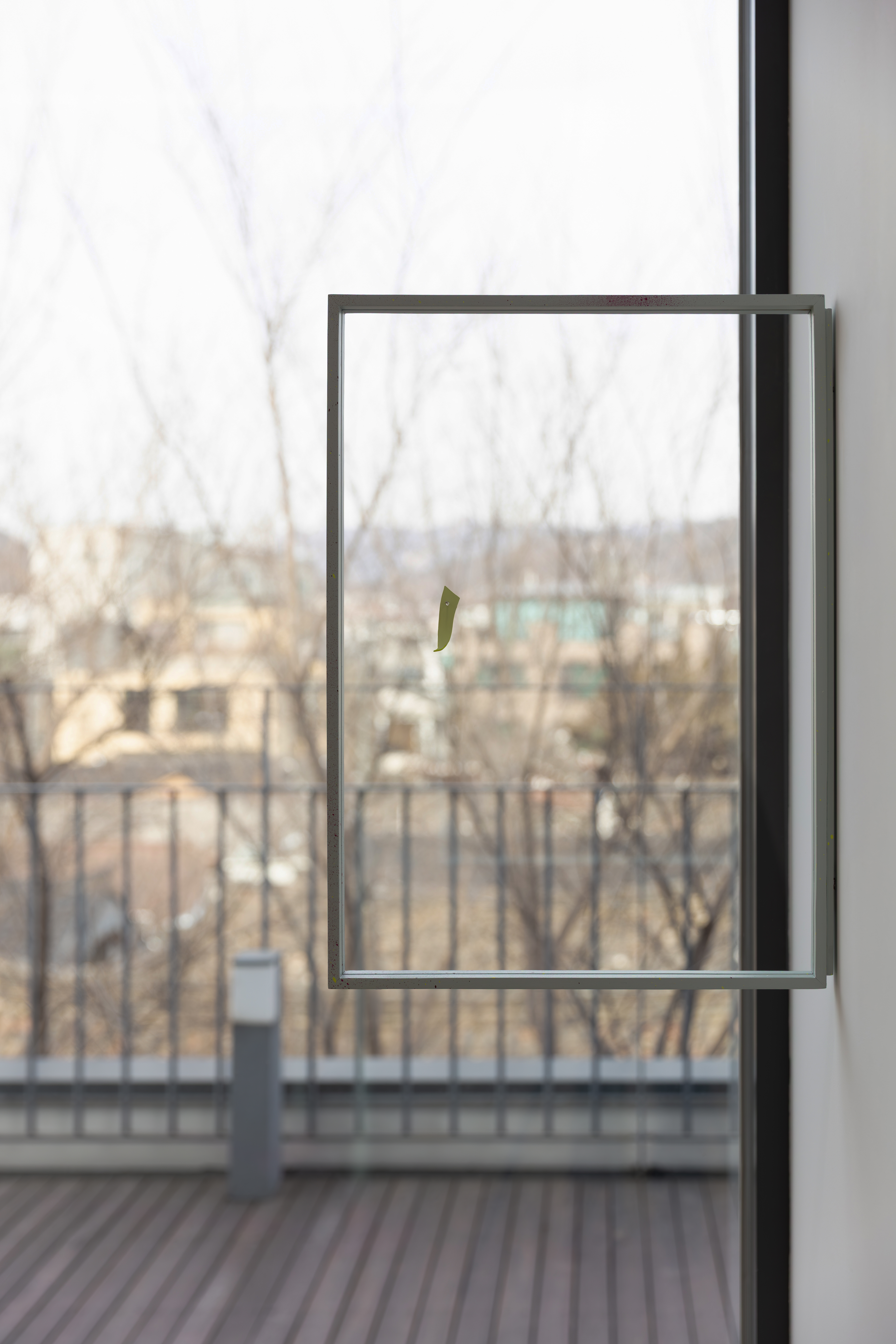
나이도, 계절도 지나가는 시간성을 전제로 한다. 모두에게 똑같이 흘러가는 물리적인 시간 즉 달력의 법칙이다. 그러나 지선경은 전시 제목 《나이없는 계절》을 통해 상충하는 두 개념을 병치하며, 이러한 통념적 시간에서의 이탈을 선언한다. 계절에 나이를 부여하는 것이 인간의 셈법이라면, 작가가 말하는 '나이 없음'은 수치화된 시간에서 벗어나 감각을 마주하겠다는 의지다. 따라서 이번 전시는 계절을 물성화하는 작가의 감각에서 출발한다.
지선경은 도시의 표면, 공기의 두께, 빛의 굴절 등 일상의 미세한 징후를 감각의 단위로 인식한다. 일반적인 추상이 대상을 해체하여 본질만을 남기는 '소거'의 과정이라면, 지선경의 추상은 보이지 않는 감각의 시간을 물질화하여 시각적으로 고정하는 '구축'의 과정이다. 빛과 어둠의 경계에서 발생하는 색채와 같이 그 찰나의 현상은 작가의 손을 거쳐 견고한 조형 언어로 치환된다. 이는 단순한 현상의 재현이라기보다, 관람객의 시선과 만났을 때 비로소 완성되는 상호작용의 사건이 된다.
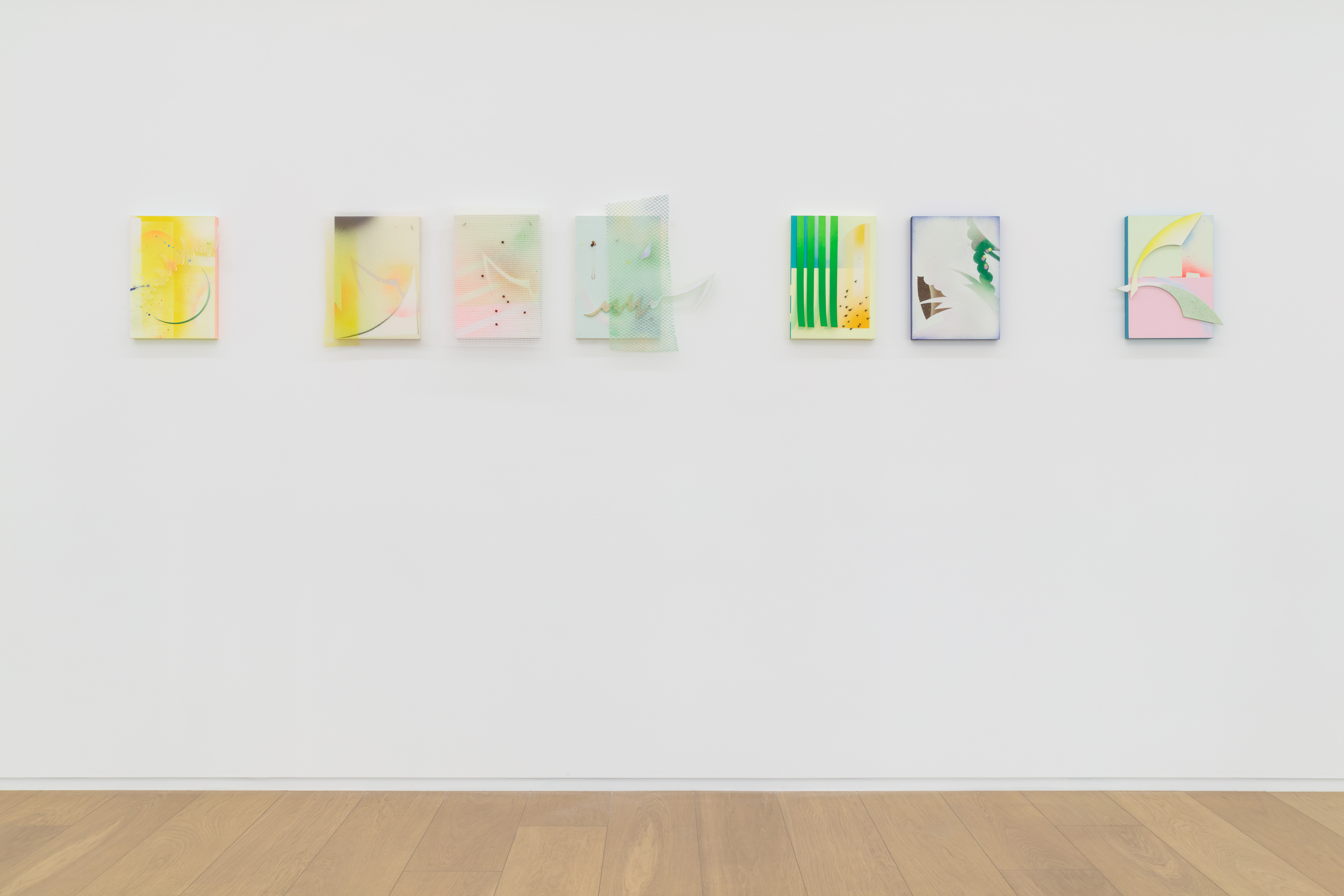
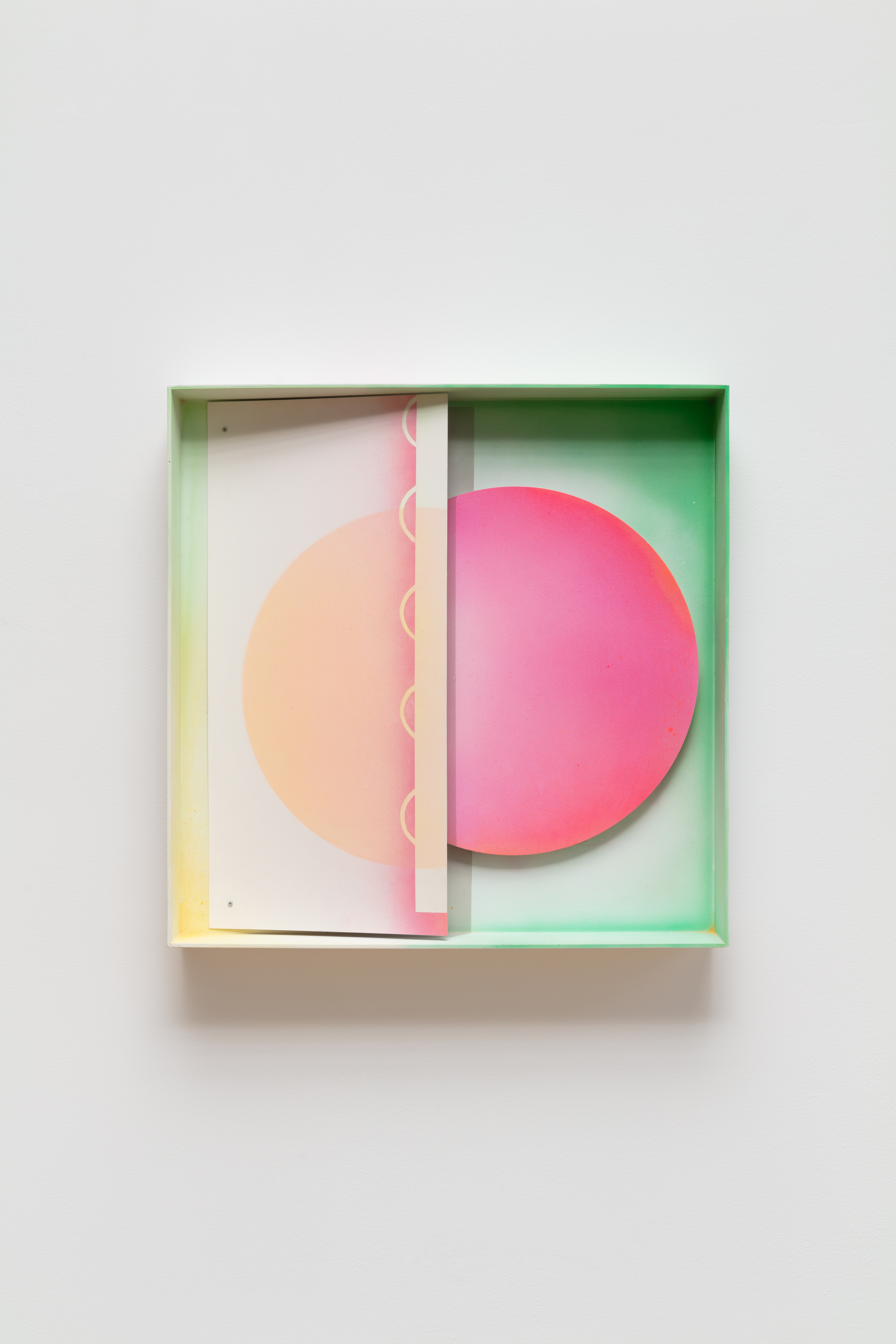
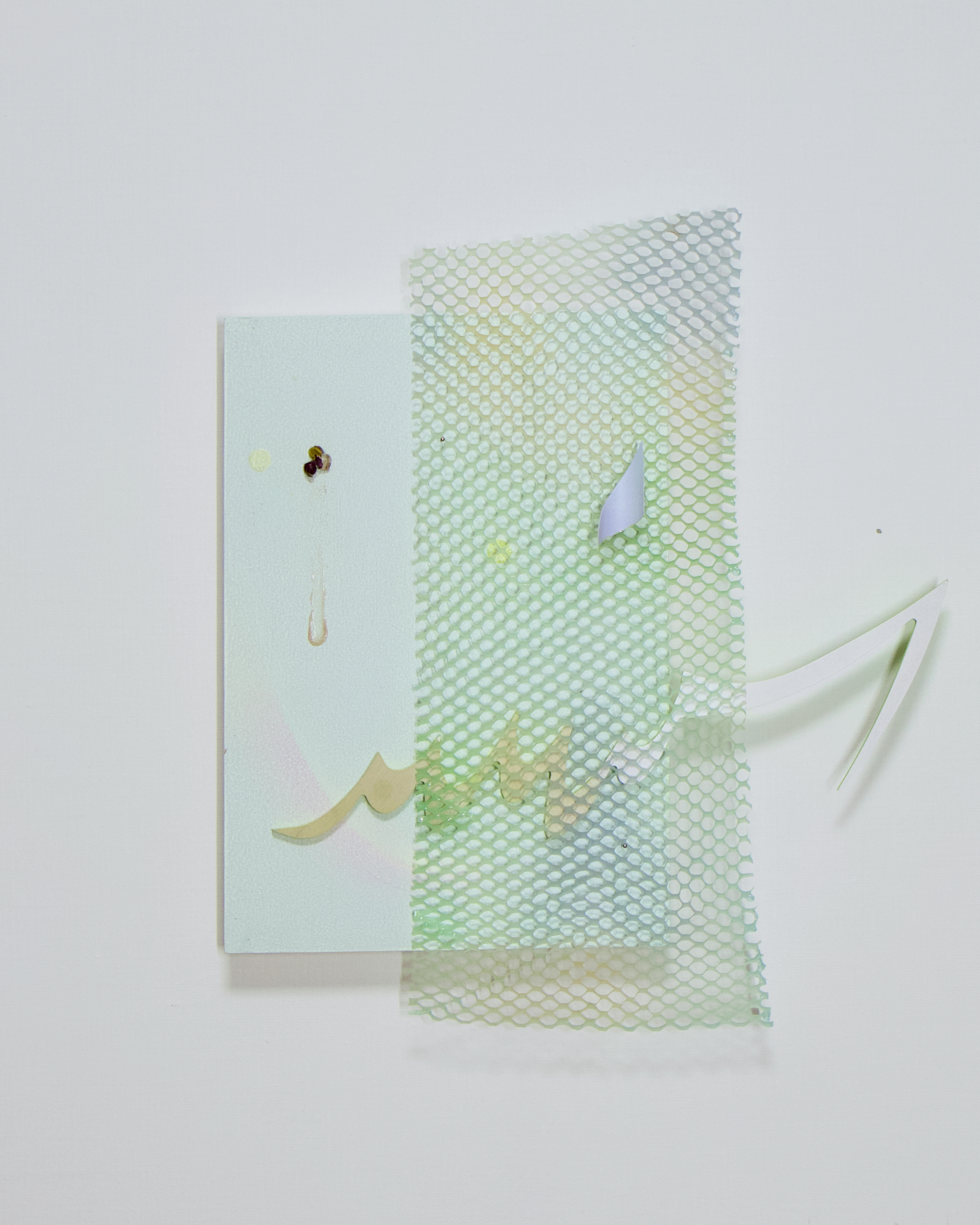
이러한 조형 실험은 독일에서 작업을 시작한 작가가 10년의 과정을 돌아보며, 과거의 시간을 현재와 겹쳐보려는 시도에서 심화되었다. 이는 이번 전시를 통해 계절이라는 감각의 ‘변화’로 은유된다. 작가는 일상에서 달라져가는 공기의 두께를, 미세하게 어긋난 나뭇잎의 방향을 인지하듯 서로 다른 층위가 겹쳐지는 비동시성의 공간을 감각했다. 중첩된 시간 속에서 조금씩 흘러가며 쉼 없이 변화하는 물체들의 균열은 지선경의 작품을 통해 드러난다. 보이지 않는 시간을 물질화하기 위해 작가는 에폭시를 겹겹이 적셔 그라데이션을 구축하고, 색이 변화하는 과정 그 자체를 시각화하는 등 재료의 물성을 통해 시간의 층위를 조립해낸다.
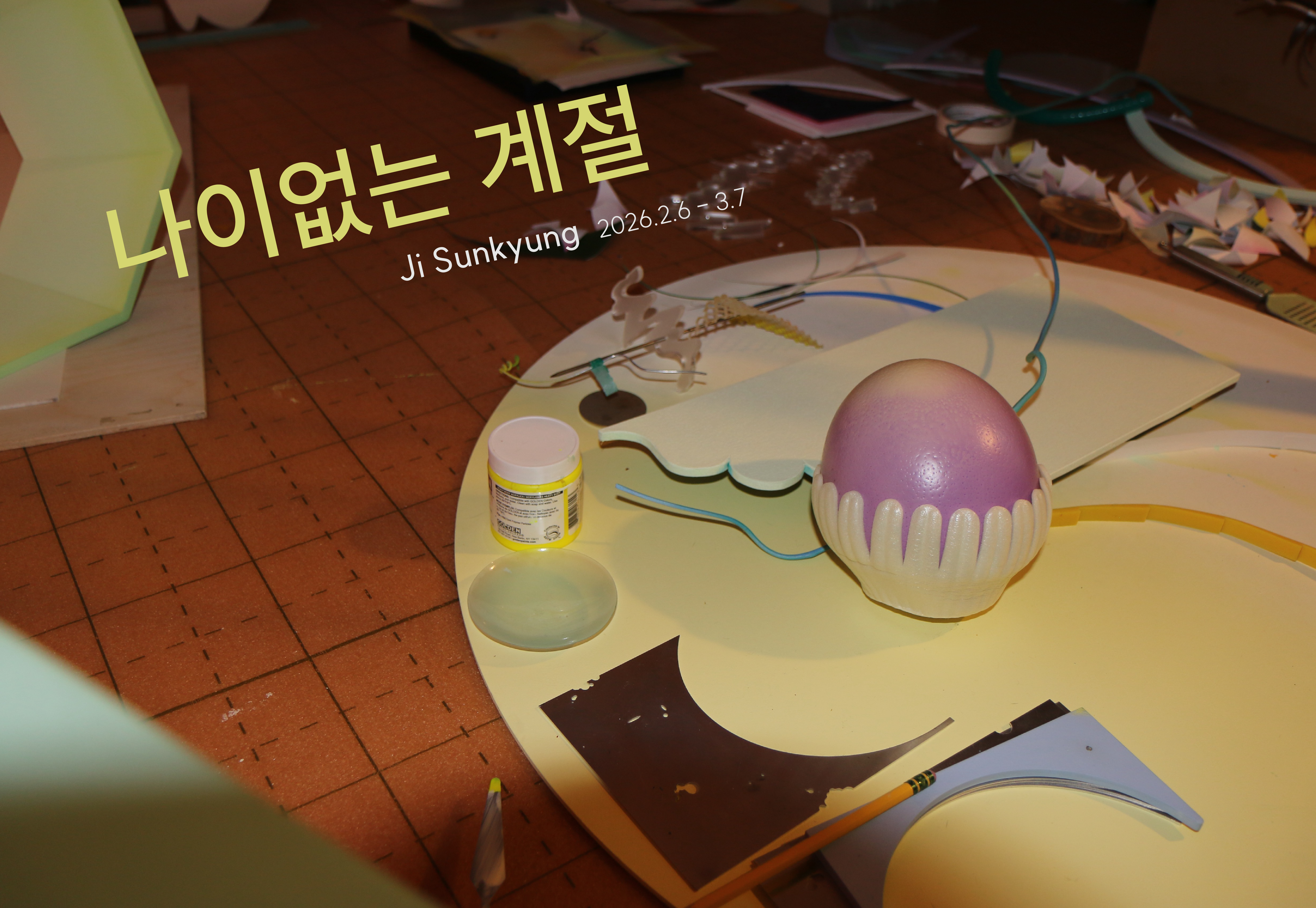
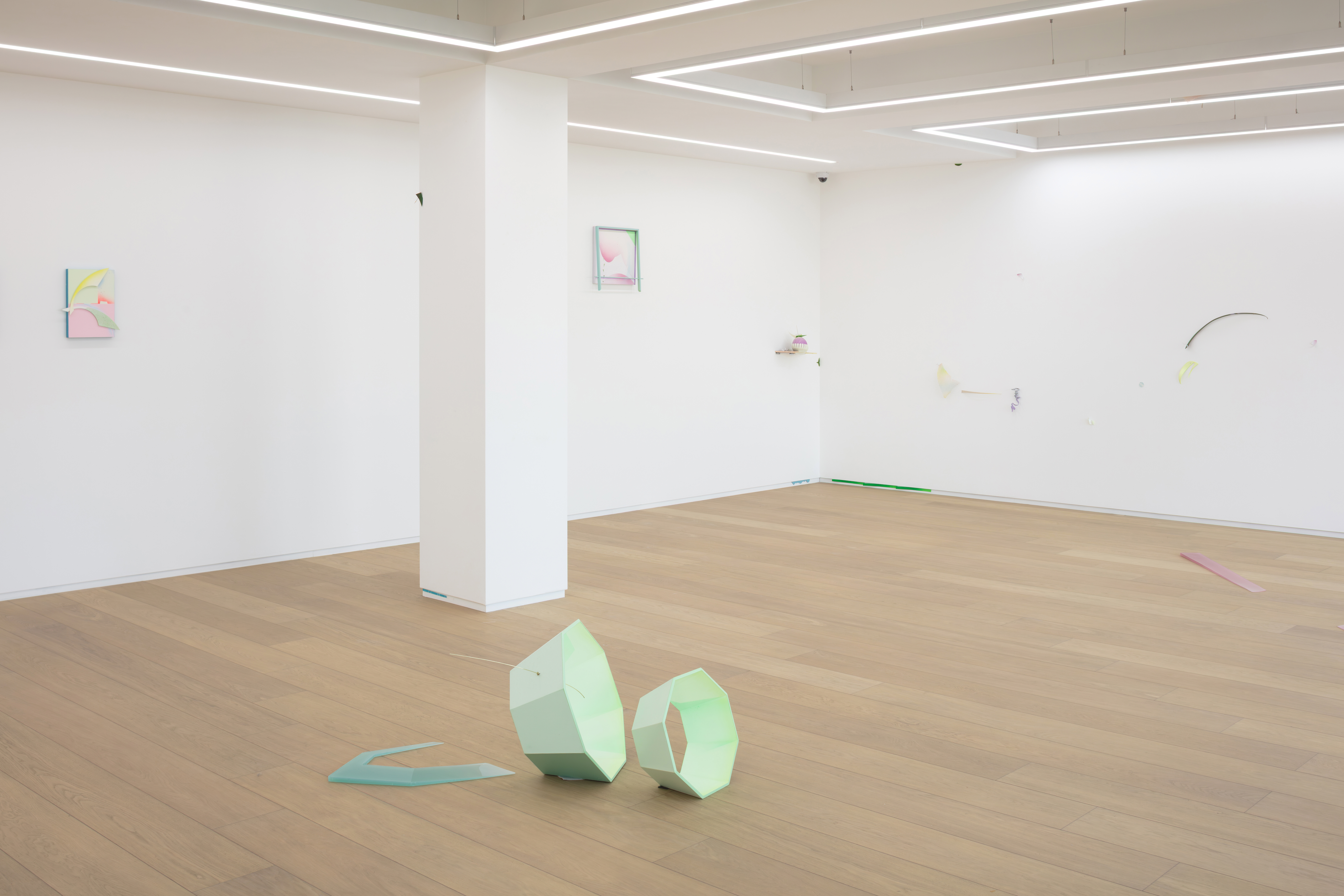
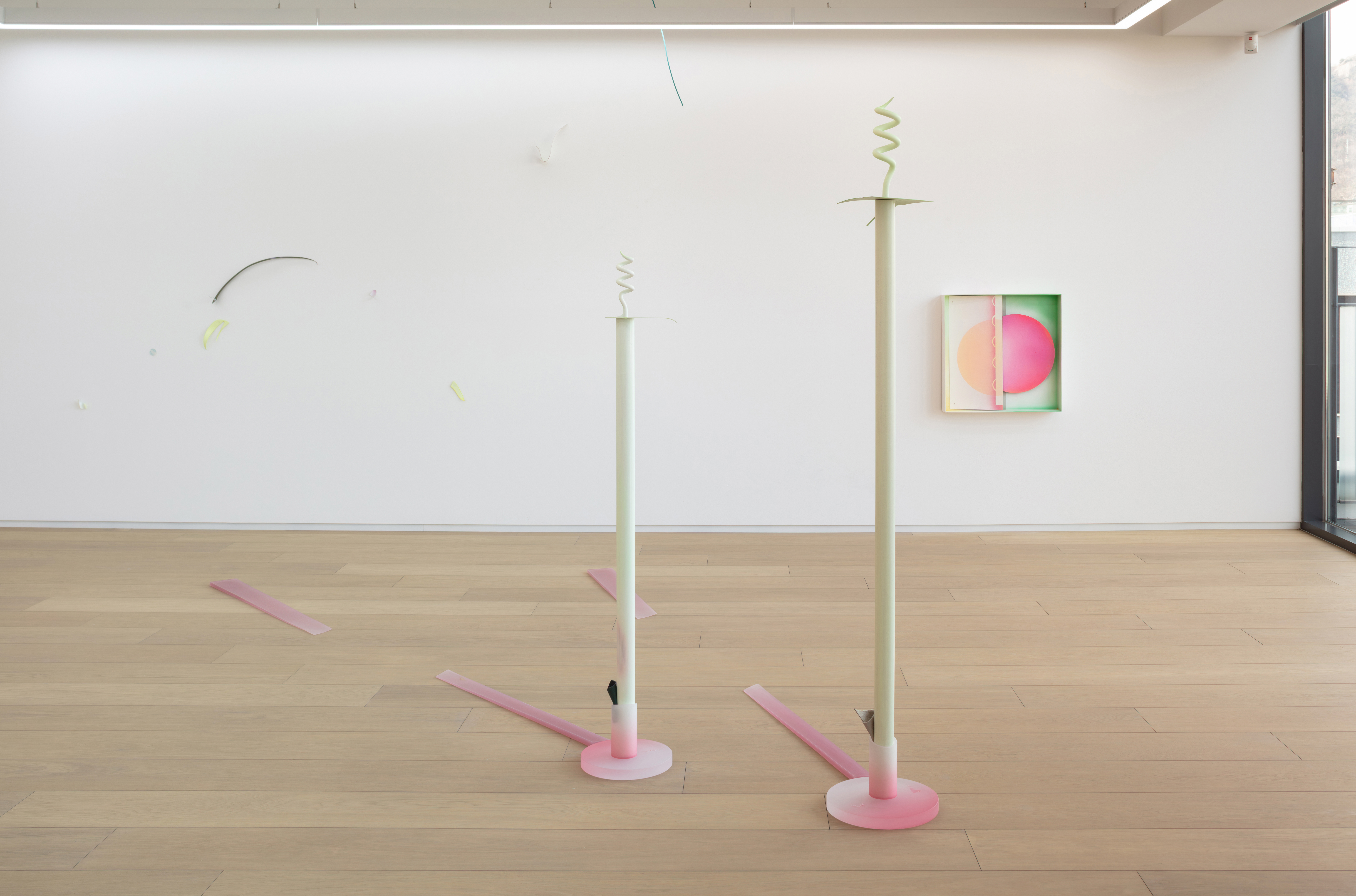
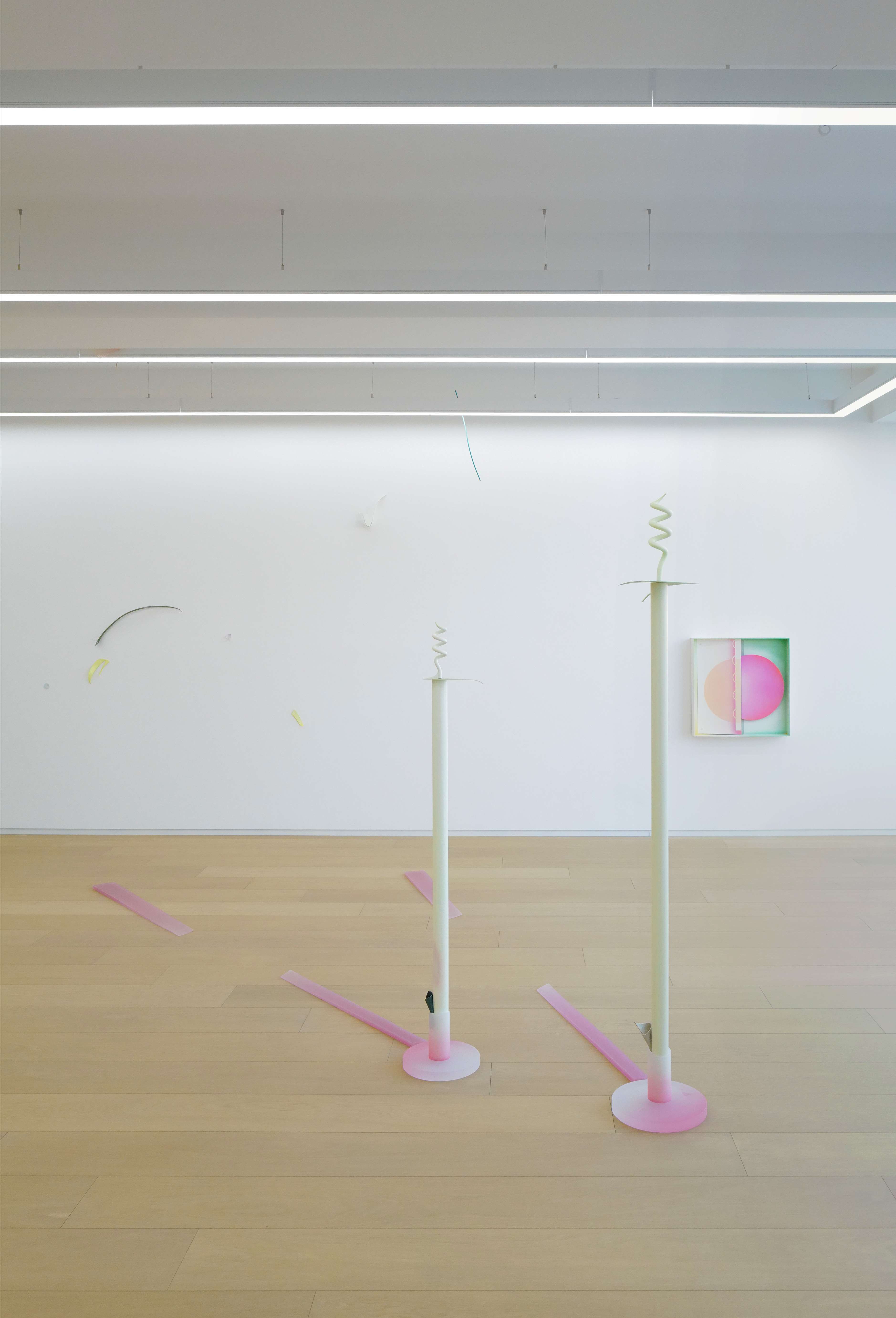
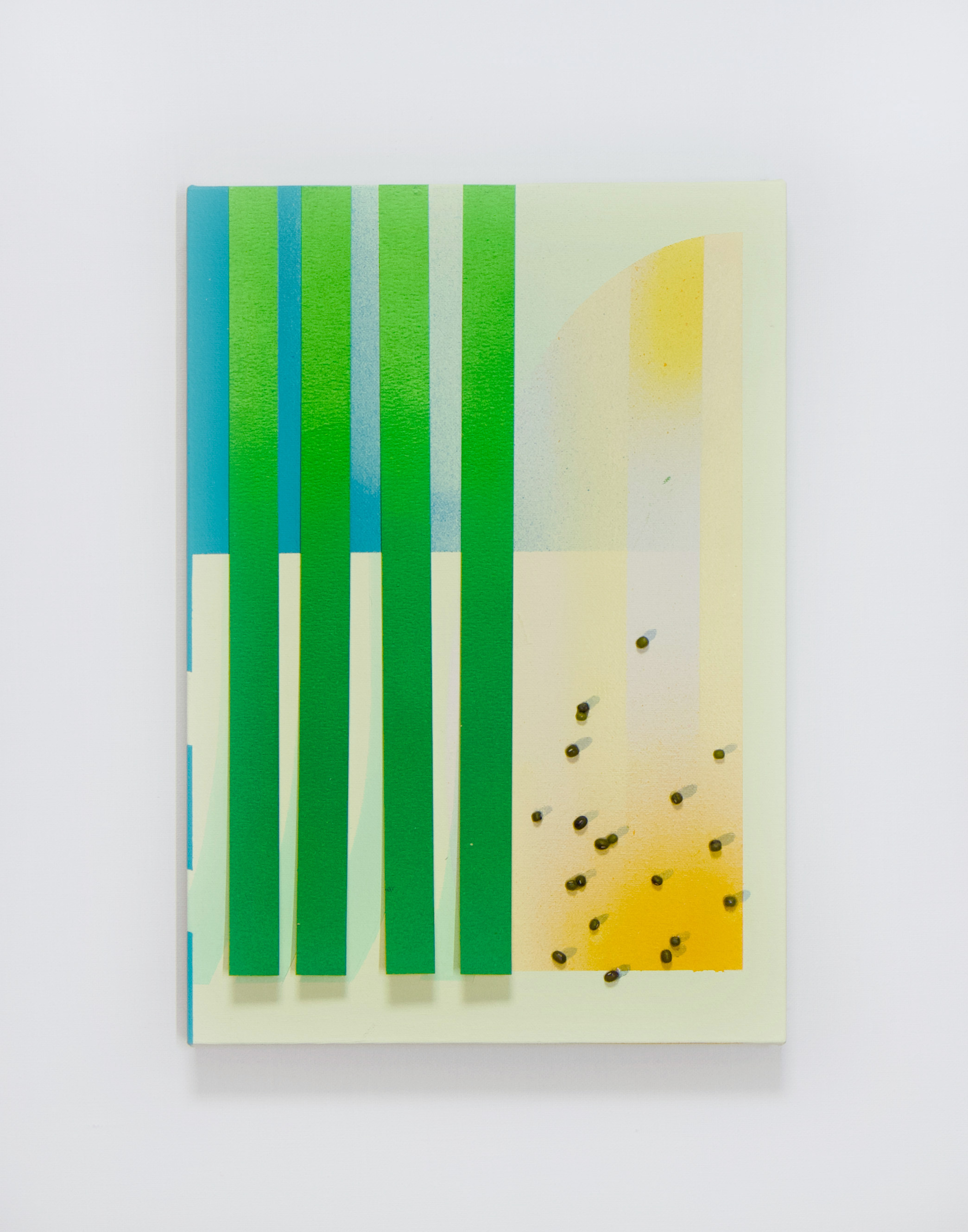
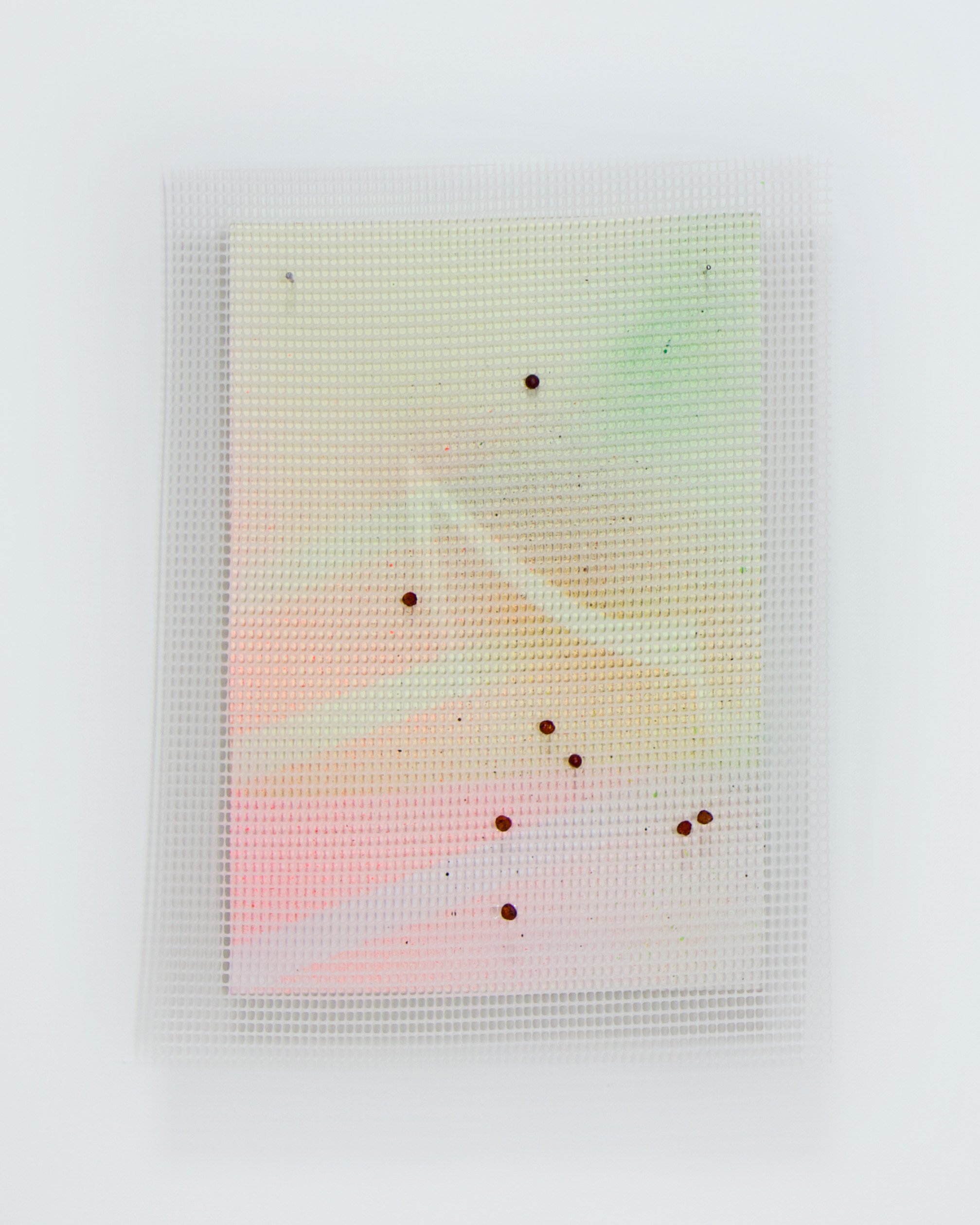
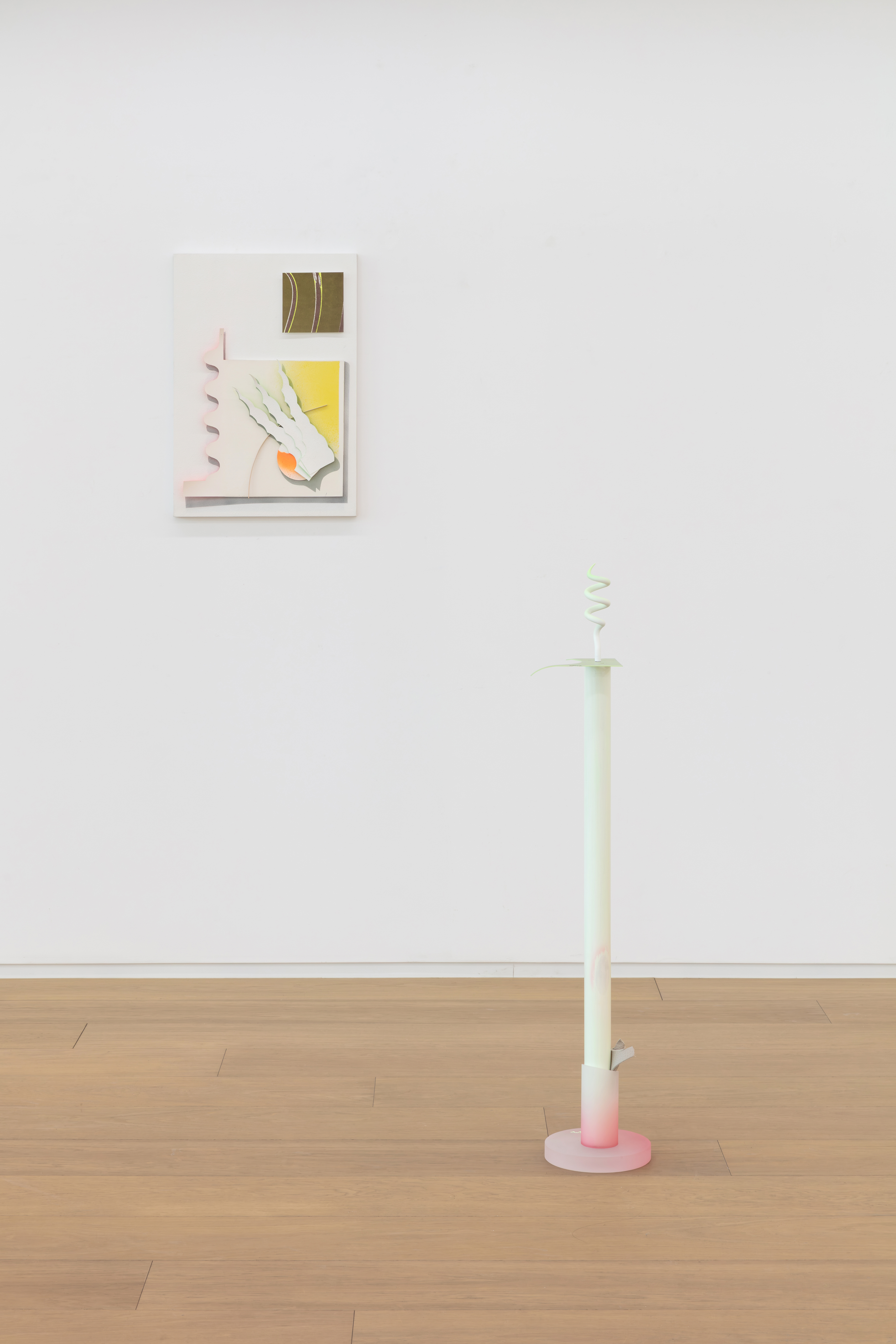
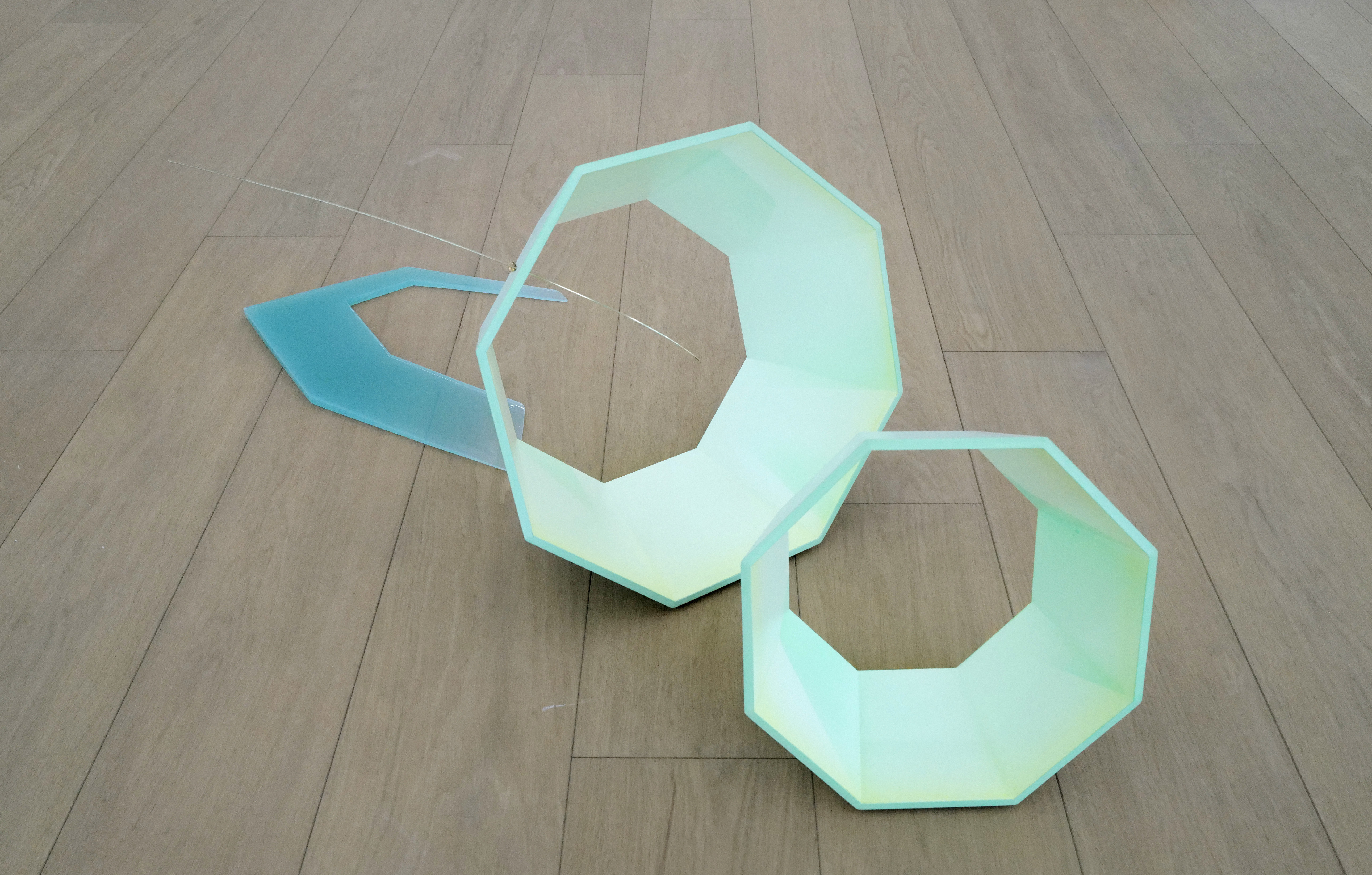

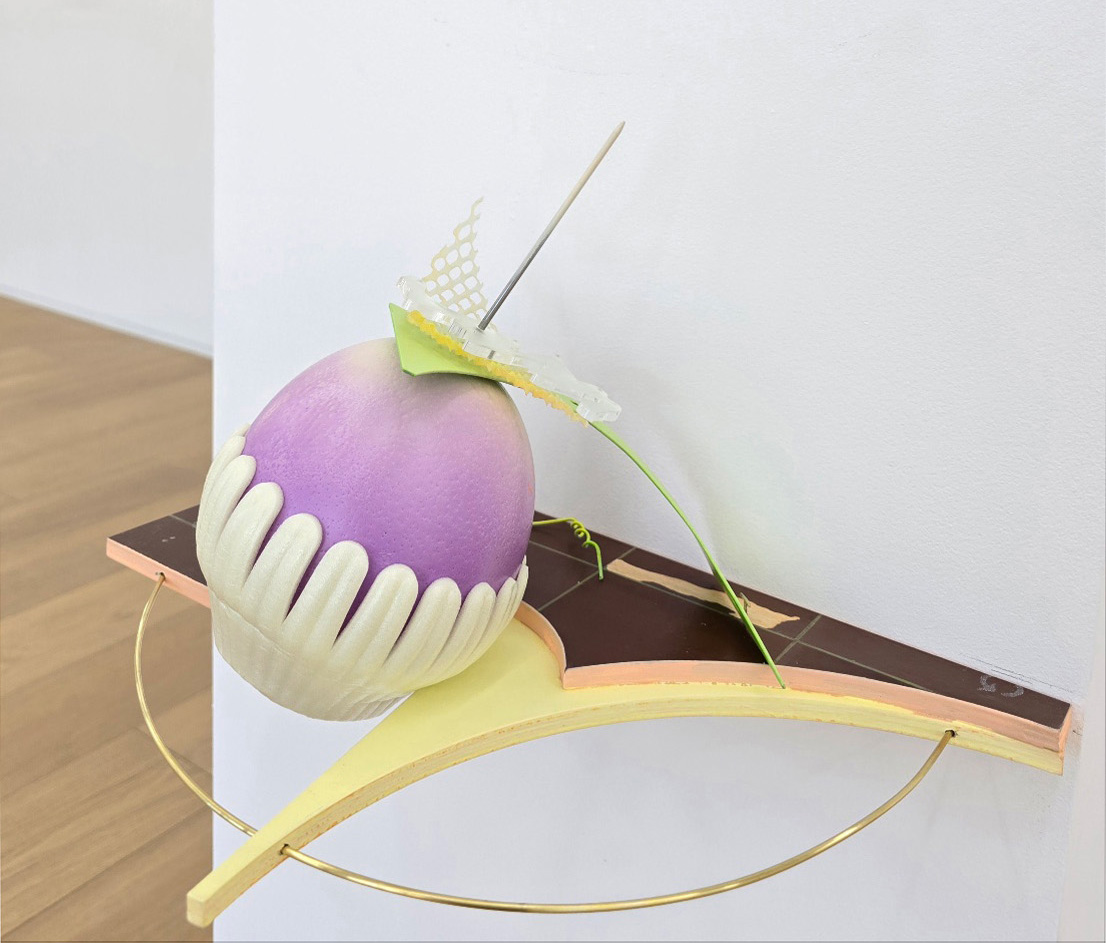
전시장 바닥에 놓인 구체(Sphere)들은 그라데이션된 레진을 통해 응고된 시간을 시사하며, 어떠한 기호로 ‘의미화되기 직전’의 찰나를 물성으로 증명해 보인다. 여기에 박힌 황동 침은 흐를 것만 같은 시간의 잔여를 중지시키기 위한 단호한 일격이다. 작품 <보호 이후>는 생명이 빠져나간 뒤 보호의 기능만 남은 타조알 껍데기를 매개로 한다. 작가는 이 비어있는 구조물 위에 포도의 색을 입히며 포도의 형태를 암시해가는 과정을 그리는데, 그 외피에는 퇴적된 시간의 잔여물들이 기호처럼 파편적으로 점착되어 있다. 와인 오프너의 스크류가 역방향으로 박힌 <익지 않은 신호>은 숙성과 개봉이라는 본질적 기능을 정지시키는 은유이며, 그로부터 드리워진 그림자는 끊겼다 이어지기를 반복하며 어긋난 시간의 틈을 생성한다. 특히 전시장 입구에서 가을부터 겨울까지의 시간을 품은 피라칸사스 열매는 한 나무에서 같은 날 채집되었음에도, 각기 다른 속도로 변형되는 비동시적인 상태를 드러낸다. 이는 마치 헨젤과 그레텔의 빵 부스러기처럼, 작가가 지나온 사건의 핵심(알맹이)들이 되어 회화의 표면 위에서 끊임없이 '비동시성의 길'을 이어 나간다.
그리하여 지선경의 작업은 마치 우리가 지도에서 위도와 경도를 찍듯, 흐르는 시간 위에 감각의 좌표를 새기는 일과 같다. 보이지 않는 시간을 2차원의 평면으로, 3차원의 조각으로 구현해 낸 그의 작업은 스스로 정의한 바와 같이 ‘잔여적 추상’의 형태를 띠게 된다. 이번 전시는 관람객에게 시간의 흐름을 수동적으로 받아들이는 것이 아니라, 작가가 구축한 ‘비동시적 시간’의 구조 안에서 각자의 감각을 능동적으로 재배열해보기를 제안한다.
지선경은 도시의 표면, 공기의 두께, 빛의 굴절 등 일상의 미세한 징후를 감각의 단위로 인식한다. 일반적인 추상이 대상을 해체하여 본질만을 남기는 '소거'의 과정이라면, 지선경의 추상은 보이지 않는 감각의 시간을 물질화하여 시각적으로 고정하는 '구축'의 과정이다. 빛과 어둠의 경계에서 발생하는 색채와 같이 그 찰나의 현상은 작가의 손을 거쳐 견고한 조형 언어로 치환된다. 이는 단순한 현상의 재현이라기보다, 관람객의 시선과 만났을 때 비로소 완성되는 상호작용의 사건이 된다.
이러한 조형 실험은 독일에서 작업을 시작한 작가가 10년의 과정을 돌아보며, 과거의 시간을 현재와 겹쳐보려는 시도에서 심화되었다. 이는 이번 전시를 통해 계절이라는 감각의 ‘변화’로 은유된다. 작가는 일상에서 달라져가는 공기의 두께를, 미세하게 어긋난 나뭇잎의 방향을 인지하듯 서로 다른 층위가 겹쳐지는 비동시성의 공간을 감각했다. 중첩된 시간 속에서 조금씩 흘러가며 쉼 없이 변화하는 물체들의 균열은 지선경의 작품을 통해 드러난다. 보이지 않는 시간을 물질화하기 위해 작가는 에폭시를 겹겹이 적셔 그라데이션을 구축하고, 색이 변화하는 과정 그 자체를 시각화하는 등 재료의 물성을 통해 시간의 층위를 조립해낸다.
전시장 바닥에 놓인 구체(Sphere)들은 그라데이션된 레진을 통해 응고된 시간을 시사하며, 어떠한 기호로 ‘의미화되기 직전’의 찰나를 물성으로 증명해 보인다. 여기에 박힌 황동 침은 흐를 것만 같은 시간의 잔여를 중지시키기 위한 단호한 일격이다. 작품 <보호 이후>는 생명이 빠져나간 뒤 보호의 기능만 남은 타조알 껍데기를 매개로 한다. 작가는 이 비어있는 구조물 위에 포도의 색을 입히며 포도의 형태를 암시해가는 과정을 그리는데, 그 외피에는 퇴적된 시간의 잔여물들이 기호처럼 파편적으로 점착되어 있다. 와인 오프너의 스크류가 역방향으로 박힌 <익지 않은 신호>은 숙성과 개봉이라는 본질적 기능을 정지시키는 은유이며, 그로부터 드리워진 그림자는 끊겼다 이어지기를 반복하며 어긋난 시간의 틈을 생성한다. 특히 전시장 입구에서 가을부터 겨울까지의 시간을 품은 피라칸사스 열매는 한 나무에서 같은 날 채집되었음에도, 각기 다른 속도로 변형되는 비동시적인 상태를 드러낸다. 이는 마치 헨젤과 그레텔의 빵 부스러기처럼, 작가가 지나온 사건의 핵심(알맹이)들이 되어 회화의 표면 위에서 끊임없이 '비동시성의 길'을 이어 나간다.
그리하여 지선경의 작업은 마치 우리가 지도에서 위도와 경도를 찍듯, 흐르는 시간 위에 감각의 좌표를 새기는 일과 같다. 보이지 않는 시간을 2차원의 평면으로, 3차원의 조각으로 구현해 낸 그의 작업은 스스로 정의한 바와 같이 ‘잔여적 추상’의 형태를 띠게 된다. 이번 전시는 관람객에게 시간의 흐름을 수동적으로 받아들이는 것이 아니라, 작가가 구축한 ‘비동시적 시간’의 구조 안에서 각자의 감각을 능동적으로 재배열해보기를 제안한다.
Both age and seasons are premised on the passage of time. They follow the physical laws of the calendar—time that flows equally for everyone. However, in the exhibition title Season Without Age, Ji Sunkyung juxtaposes these two conflicting concepts, declaring a departure from such conventional notions of time. If assigning an age to a season is a human method of calculation, the artist’s agelessness represents a will to escape numerical time and confront pure sensation. Consequently, this exhibition originates from the artist's sensibility in materializing the seasons.
Ji Sunkyung perceives the subtle signs of daily life—the surface of the city, the thickness of the air, the refraction of light—as units of sensation. While general abstraction is often a process of elimination, deconstructing an object to leave only its essence, Ji’s abstraction is a process of construction, materializing and visually anchoring the invisible time of sensation. Like colors emerging at the boundary between light and shadow, these fleeting phenomena are translated into a robust formal language through the artist's hands. Rather than a mere reproduction of a phenomenon, it becomes an event of interaction that is only completed when it meets the viewer's gaze.
This formal experimentation deepened as the artist, who began her career in Germany, looked back on her ten-year journey and attempted to overlap past time with the present. In this exhibition, this is metaphorized as the change in the sensation of seasons. Just as one perceives the shifting thickness of the air or the minutely misaligned direction of leaves in daily life, the artist sensed a space of non-contemporaneity where different layers overlap. Through Ji’s work, the cracks in objects—shifting and incessantly changing within overlapping time—are revealed. To materialize invisible time, the artist assembles layers of time through the physical properties of her materials, saturating epoxy in layers to build gradients and visualizing the very process of color transformation.
In 17th-century Dutch Still Life, the decay of flowers and fruit warned of the transience of life (Vanitas), taxidermying time as dead nature. In contrast, Ji Sunkyung’s work does not stand still but continues as a process of becoming. Instead of freezing the subject, she visualizes the very trajectory of time in which it changes and matures. For instance, the melon-shaped spheres placed on the exhibition floor suggest solidified time through gradated resin, physically manifesting a fleeting moment "just before being signified" as a symbol. The brass needles embedded within them act as a resolute strike, intended to halt the lingering remnants of time that seem on the verge of flowing away. The work "After Protection" utilizes ostrich eggshells—a medium where the function of protection remains even after life has departed. The artist paints these shells with the hues of grapes, suggesting their form; upon this outer skin, the fragments of accumulated time are adhered like scattered symbols.
In "Unripe Signal," where a wine opener's screw is driven in reverse, the work serves as a metaphor that suspends the essential functions of aging and uncorking. The shadows cast from it repeatedly break and reconnect, creating a rift of displaced time. Notably, the pyracantha berries at the entrance, which hold the passage of time from autumn to winter, reveal an asynchronicity—transforming at different rates despite being harvested from the same tree on the same day. Much like the breadcrumbs of Hansel and Gretel, these elements become the core "kernels" of the events the artist has traversed, incessantly extending a "path of non-contemporaneity" across the surface of the paintings.
Ultimately, Ji Sunkyung’s work is akin to engraving coordinates of sensation onto the flow of time, much like marking latitude and longitude on a map. Her work, which embodies invisible time into 2D planes and 3D sculptures, takes the form of what she defines as Residual Abstraction. This exhibition invites viewers not to passively accept the flow of time, but to actively rearrange their own senses within the structure of non-contemporaneous time constructed by the artist.
Ji Sunkyung perceives the subtle signs of daily life—the surface of the city, the thickness of the air, the refraction of light—as units of sensation. While general abstraction is often a process of elimination, deconstructing an object to leave only its essence, Ji’s abstraction is a process of construction, materializing and visually anchoring the invisible time of sensation. Like colors emerging at the boundary between light and shadow, these fleeting phenomena are translated into a robust formal language through the artist's hands. Rather than a mere reproduction of a phenomenon, it becomes an event of interaction that is only completed when it meets the viewer's gaze.
This formal experimentation deepened as the artist, who began her career in Germany, looked back on her ten-year journey and attempted to overlap past time with the present. In this exhibition, this is metaphorized as the change in the sensation of seasons. Just as one perceives the shifting thickness of the air or the minutely misaligned direction of leaves in daily life, the artist sensed a space of non-contemporaneity where different layers overlap. Through Ji’s work, the cracks in objects—shifting and incessantly changing within overlapping time—are revealed. To materialize invisible time, the artist assembles layers of time through the physical properties of her materials, saturating epoxy in layers to build gradients and visualizing the very process of color transformation.
In 17th-century Dutch Still Life, the decay of flowers and fruit warned of the transience of life (Vanitas), taxidermying time as dead nature. In contrast, Ji Sunkyung’s work does not stand still but continues as a process of becoming. Instead of freezing the subject, she visualizes the very trajectory of time in which it changes and matures. For instance, the melon-shaped spheres placed on the exhibition floor suggest solidified time through gradated resin, physically manifesting a fleeting moment "just before being signified" as a symbol. The brass needles embedded within them act as a resolute strike, intended to halt the lingering remnants of time that seem on the verge of flowing away. The work "After Protection" utilizes ostrich eggshells—a medium where the function of protection remains even after life has departed. The artist paints these shells with the hues of grapes, suggesting their form; upon this outer skin, the fragments of accumulated time are adhered like scattered symbols.
In "Unripe Signal," where a wine opener's screw is driven in reverse, the work serves as a metaphor that suspends the essential functions of aging and uncorking. The shadows cast from it repeatedly break and reconnect, creating a rift of displaced time. Notably, the pyracantha berries at the entrance, which hold the passage of time from autumn to winter, reveal an asynchronicity—transforming at different rates despite being harvested from the same tree on the same day. Much like the breadcrumbs of Hansel and Gretel, these elements become the core "kernels" of the events the artist has traversed, incessantly extending a "path of non-contemporaneity" across the surface of the paintings.
Ultimately, Ji Sunkyung’s work is akin to engraving coordinates of sensation onto the flow of time, much like marking latitude and longitude on a map. Her work, which embodies invisible time into 2D planes and 3D sculptures, takes the form of what she defines as Residual Abstraction. This exhibition invites viewers not to passively accept the flow of time, but to actively rearrange their own senses within the structure of non-contemporaneous time constructed by the artist.